That is one reason thermal imaging during a home inspection in Miami can be useful. A thermal camera shows temperature differences. An experienced inspector interprets those differences, investigates the area, and, when appropriate, verifies the finding with another tool such as a moisture meter.
An InterNACHI overview of infrared thermography for home inspectors explains how infrared imaging can help identify areas associated with moisture, insulation deficiencies, air leakage, electrical overheating, and roof concerns.
For many Miami properties, it can add useful information when moisture, previous leaks, HVAC performance, electrical concerns, or hard-to-see conditions are part of the picture. Its value comes from how the inspector applies the technology, not from simply owning a thermal camera.
What Does Thermal Imaging Actually Do?
Thermal imaging, also called infrared or IR imaging, measures infrared energy emitted from surfaces and translates temperature differences into a visual image.
An inspector may scan ceilings, walls, floors, electrical equipment, HVAC components, and other accessible areas looking for patterns that appear unusual compared with surrounding materials.
That distinction matters. The camera is not looking through the wall. It is reading the surface temperature of the wall.
For example, an unusual cool area on a ceiling might be associated with moisture above it. It could also have another explanation. An infrared image should normally lead to further investigation rather than an immediate conclusion. Material emissivity, surface conditions, and the environment can all affect what appears in the image.
Think of the camera as a very good clue finder. It is not a crystal ball.
Why Can Thermal Imaging Be Particularly Useful in Miami?
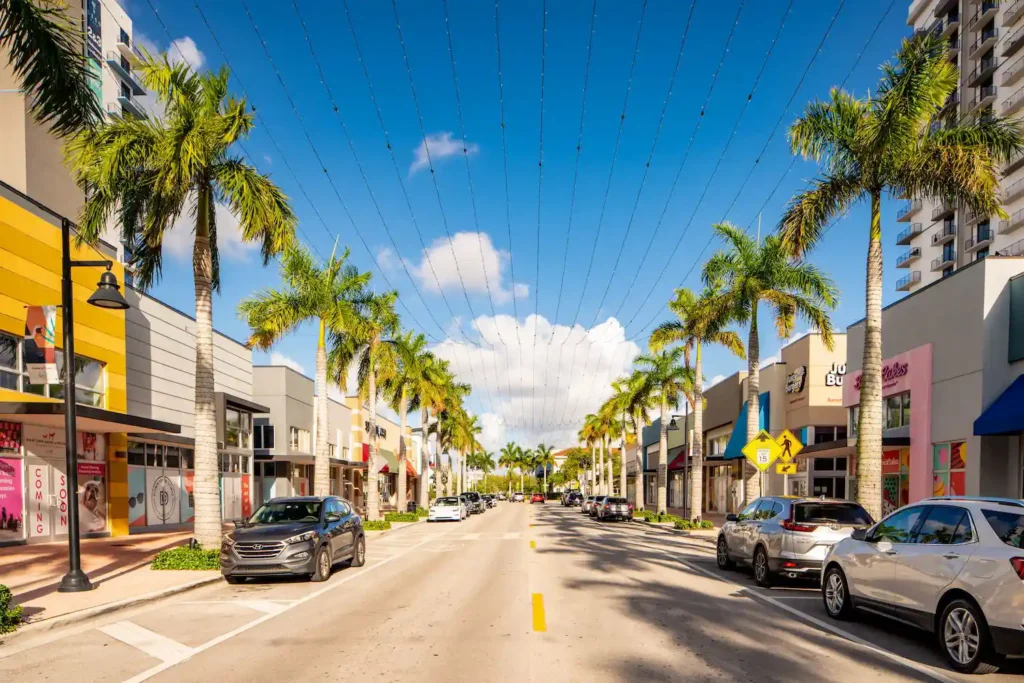
Moisture deserves special attention in South Florida. Miami-Dade County climate data identifies average annual relative humidity of approximately 84 percent in the morning and 63 percent in the afternoon, alongside a hot, humid climate.
That environment does not automatically mean a property has moisture problems. When water enters through a roof, window, plumbing connection, exterior wall, or HVAC-related area, however, finding the signs early can make a meaningful difference.
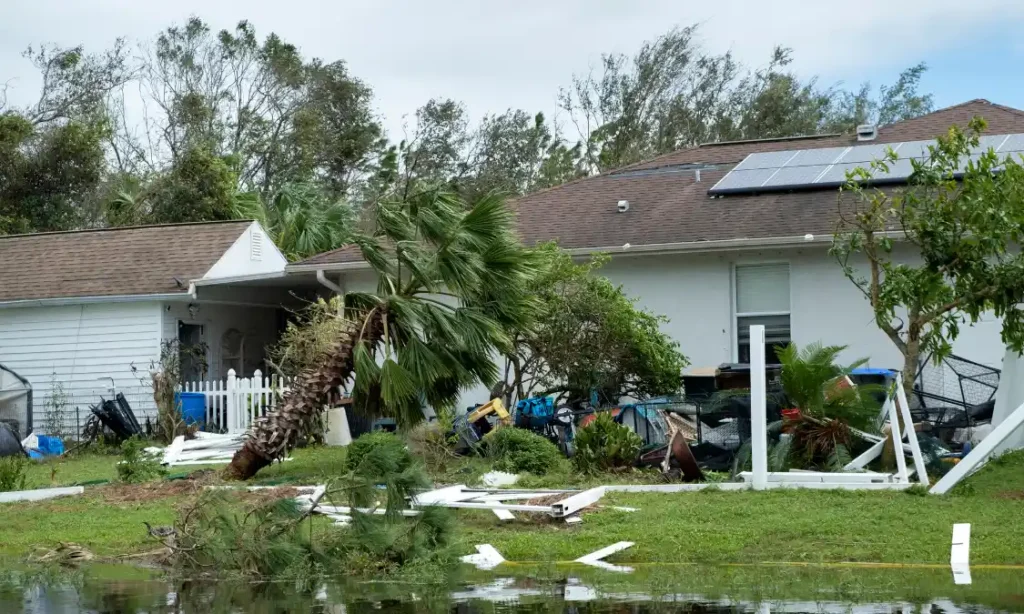
Miami-Dade properties may also be exposed to heavy rainfall, intense cooling demands, salt air, and storm-related water entry. These conditions make moisture investigation relevant when there is a history of leaks, roof damage, plumbing leakage, or suspicious staining.
Can a Thermal Camera Find Hidden Moisture?
It can help locate conditions that may indicate moisture, but the wording matters. A thermal camera does not directly see water inside a wall.
Moisture can change how building materials absorb, retain, and release heat. That may create a different surface temperature from the surrounding dry material and produce a thermal pattern that deserves attention.
During a home inspection, an inspector might notice an unusual area around a ceiling, exterior wall, window, plumbing fixture, or HVAC component and then investigate further. The infrared scan helps identify where to look. A moisture meter or another appropriate method helps determine what the anomaly may mean.
This is an advantage over relying only on visible stains. Sometimes a stain tells the story immediately. Other times, the first clue is a temperature anomaly.
Can Thermal Imaging Detect Mold?

No. A thermal camera does not detect mold.
Infrared imaging may help locate moisture conditions that could contribute to mold growth, but the camera cannot identify mold spores or determine whether mold is present behind a surface.
If an inspection identifies moisture concerns or other conditions that justify further investigation, separate mold inspection or testing may be appropriate. Keeping those services distinct makes the inspection more useful. Thermal imaging identifies thermal anomalies. Moisture meters help investigate suspected moisture. Mold inspection and testing address mold specifically.
Can Thermal Imaging Find Electrical Problems?
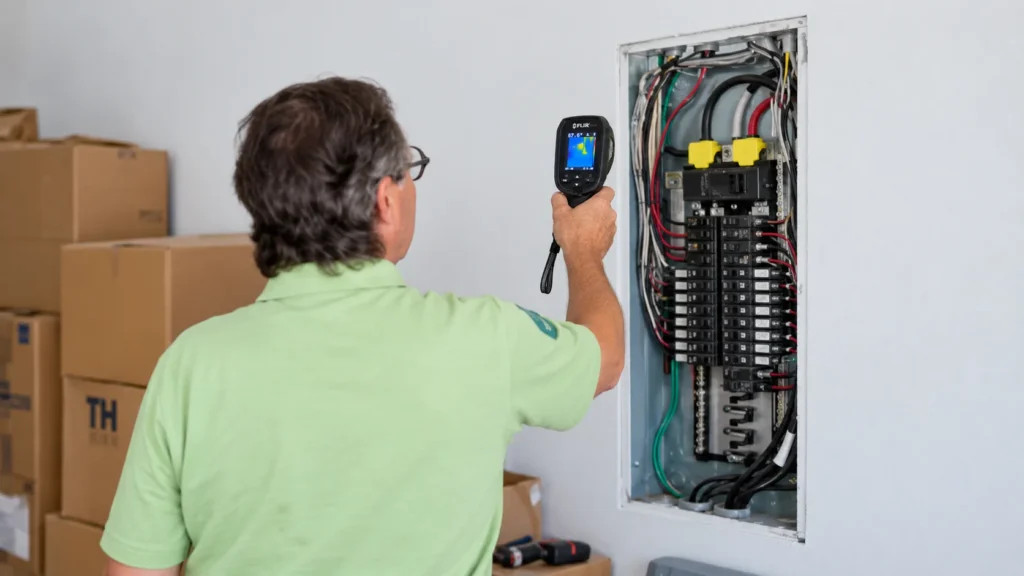
Thermal imaging can help an inspector notice unusual heat patterns associated with electrical components. Electrical resistance naturally produces some heat, so a warm component is not automatically defective. The inspector is looking for a pattern that appears abnormal compared with surrounding or similar components.
InterNACHI’s electrical infrared inspection guidance explains how thermal imaging can help document apparent temperature differences in electrical equipment when used safely and alongside visual inspection.
A colorful thermal image may look dramatic, but the colors alone do not tell you whether something is unsafe. The inspector has to consider the component, load, surrounding conditions, and other observations before deciding whether further evaluation is warranted.
What About HVAC, Insulation, and Air Leaks?

Temperature differences can provide useful clues about how a property is performing. Missing or poorly installed insulation may create recognizable thermal patterns. Air entering around windows, doors, or other parts of the building envelope may also affect surface temperatures.
U.S. Department of Energy research on thermal imaging and air leakage describes infrared approaches for identifying and analyzing building-envelope leakage and thermal irregularities.
During a residential inspection, the objective is not necessarily to perform a complete energy audit. Instead, infrared imaging can help an inspector recognize areas that deserve additional attention.
The same applies to HVAC. Differences around supply registers, ceilings, ducts, or other components may provide clues about cooling distribution or possible air leakage. Those observations then become part of the broader inspection rather than a standalone diagnosis.
What Can Thermal Imaging Miss?
This is where choosing the inspector becomes more important than choosing the gadget.
Thermal imaging has limitations. It cannot see through drywall like an X-ray. It cannot automatically tell you what caused a temperature difference. It cannot directly identify mold. It cannot guarantee that every concealed problem in a property will be discovered.
Weather and indoor conditions can also affect the usefulness of an infrared scan. Temperature differences, humidity, sunlight, wind, surface materials, and HVAC operation may all influence the image.
Simply scanning every wall is not enough. Useful information comes from combining the image with knowledge of building systems, visual observations, and appropriate verification tools.
Does Thermal Imaging Replace a Full Home Inspection?
No. A thermal scan is an additional inspection tool, not an alternative to a professional home inspection.
Florida’s statutory definition of home inspection services describes a limited visual examination of readily accessible installed systems and components, including structure, electrical, HVAC, roof covering, plumbing, interior, exterior, and site conditions that affect the structure.
A Full Home Inspection still evaluates the property’s major accessible systems and components. HALLEY’s Full Home Inspection service describes coverage of roofing, structure, electrical, plumbing, HVAC, attic and insulation, doors, windows, and interior and exterior areas, with thermal imaging used as part of a broader evaluation when appropriate.
In other words, the camera adds another layer of information. It does not replace the inspection around it.
Need a Full Inspection
in Miami-Dade or Broward?
When Is Thermal Imaging Most Useful During a Miami Home Inspection?
There is no single property type where thermal imaging is automatically necessary. Its value tends to increase when an inspector has a reason to investigate conditions that may not be obvious visually.
It can be especially useful when there are signs or a history of roof or plumbing leaks, moisture intrusion, previous storm damage, suspicious ceiling or wall staining, uneven cooling, insulation concerns, aging electrical components, or areas that are difficult to evaluate visually.
It can also be helpful when a home appears recently renovated. Fresh paint and new finishes can make a property look pristine while saying little about what is happening behind them.
The goal is not to hunt for frightening thermal images. It is to reduce blind spots.
So, Is Thermal Imaging Worth It for a Miami Home Inspection?
For many properties, yes, when it is used correctly.
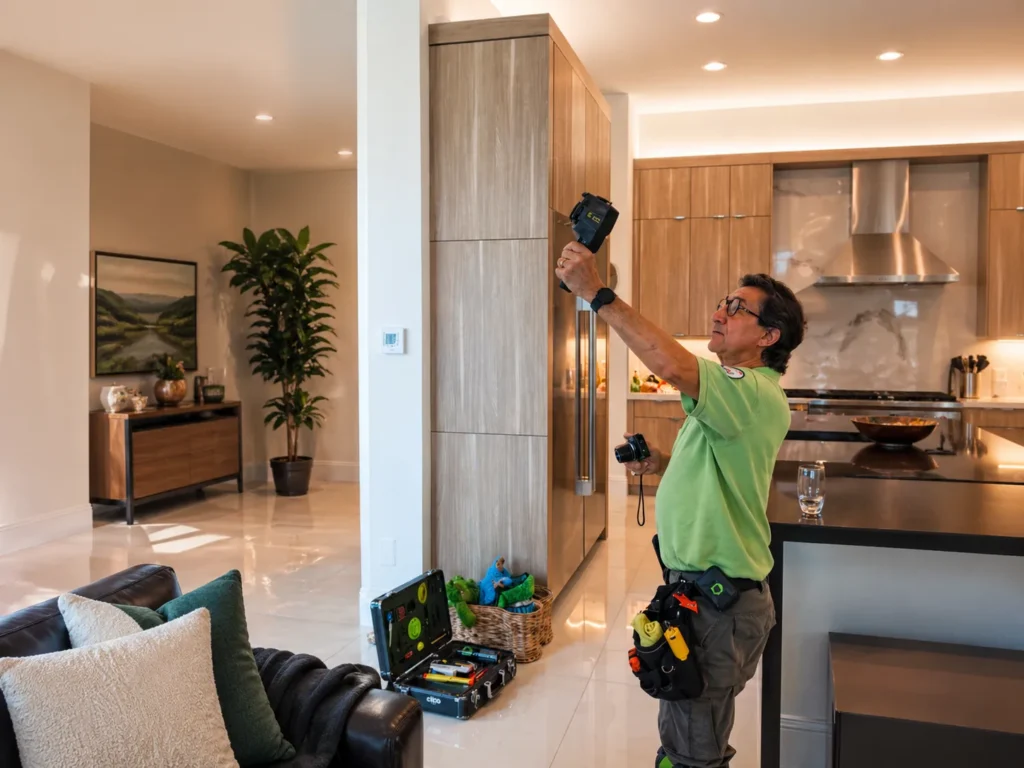
The real value of thermal imaging is its ability to show an inspector where to look more closely. A suspicious temperature pattern may lead to a moisture reading. An unusual electrical hot spot may justify further evaluation. A ceiling pattern may reveal an insulation issue that was not visually obvious.
An infrared camera should never be treated as proof by itself. The best thermal imaging home inspection combines technology with professional judgment, additional testing when appropriate, and a clear report explaining what was observed and what the next step should be.
That distinction is particularly useful in South Florida, where humidity, heavy rainfall, cooling demands, and moisture intrusion are familiar parts of evaluating residential properties.
Thermal Imaging as Part of a HALLEY Home Inspection
Home Inspections HALLEY has been inspecting properties across Miami-Dade and Broward since 2005. The company describes using infrared imaging, moisture meters, drones, sewer cameras, and other specialized tools when additional investigation can provide useful information about a property. See HALLEY’s inspection technology overview for more about that approach.
The goal is not to produce more data simply because the technology exists. It is to give buyers and homeowners information they can understand and use.
If you are buying a home in Miami-Dade or Broward and want a clearer picture of its condition before making your next decision, schedule a Full Home Inspection with Home Inspections HALLEY.
Schedule Your Inspection Today