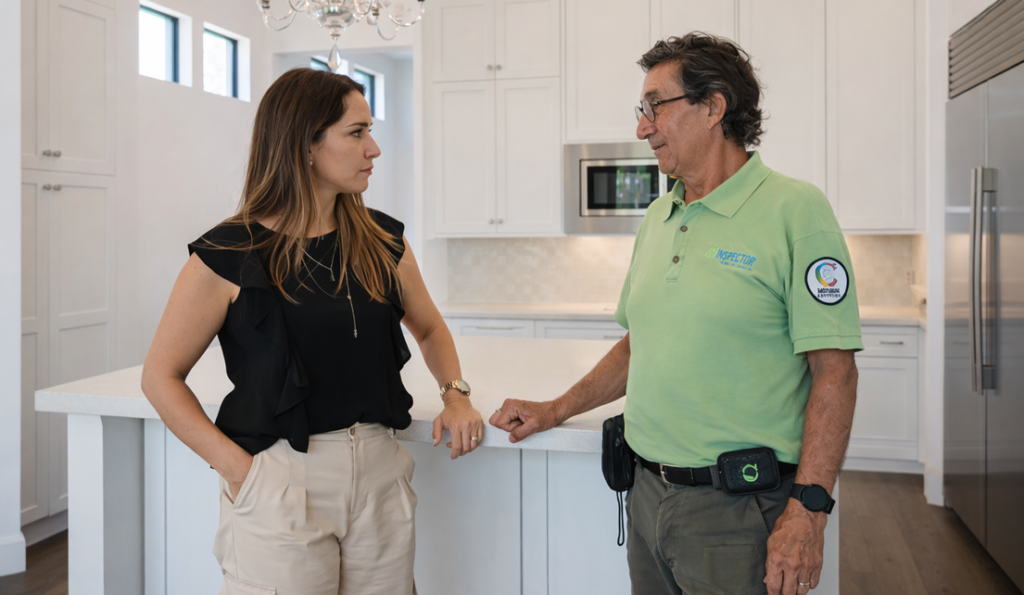
This is one of the most common questions we hear from home buyers across Miami-Dade and Broward County.
In this post, we’ll break down the key differences in the debate of 4-Point Inspection vs Full Home Inspection, so you can clearly understand what each one covers and when you actually need them.
- When is a 4-point inspection required?
- When should you schedule a full home inspection?
- How do you know which inspection your property needs?
Let’s break it down.
General Overview: 4-Point Inspection vs Full Home Inspection
Many Florida insurance companies require a 4-point inspection before issuing or renewing a policy. Because of that requirement, buyers sometimes assume that completing a 4-point inspection means the property has been fully inspected.
But the truth is that these two inspections serve very different purposes. A 4-point inspection focuses only on four major systems for insurance underwriting, while a full home inspection evaluates the overall condition of the property to help buyers make informed decisions.
Understanding the difference between these inspections can help you avoid unexpected repair costs and protect your investment when purchasing a home in South Florida.
What Is a 4-Point Inspection?
A 4-point inspection is a limited evaluation that focuses on four key systems in a home:
- Roof
- Electrical system
- Plumbing system
- HVAC (heating and air conditioning)
This inspection is commonly required by insurance companies when issuing or renewing coverage, especially for older homes. Its purpose is to verify that these essential systems are in acceptable condition and do not present a significant risk.
During the inspection, the inspector documents the visible condition and approximate age of these systems, typically including photos and brief notes that the insurance company can review.
Because the inspection is limited in scope, it is usually quick and efficient. Most 4-point inspections take 30 to 45 minutes, depending on the size and accessibility of the property. However, it’s important to understand that a 4-point inspection does not evaluate the entire home.
How Do Insurance Companies Use a 4-Point Inspection?
Insurers review the information provided in the report—such as the age of systems, visible wear, and potential safety concerns—to decide whether coverage can be issued without additional conditions.
Depending on the findings, the insurance company may approve the policy, request repairs or updates, limit coverage, or delay approval until certain issues are addressed.
For this reason, a 4-point inspection is primarily used as supporting documentation for insurance underwriting, rather than a comprehensive evaluation of the property’s overall condition.
Need a 4 Point Inspection
in Miami-Dade or Broward?
What Is a Full Home Inspection?
A full home inspection is a much more comprehensive evaluation of a property. Its goal is to help buyers understand the home’s overall condition before making a major financial decision.
Unlike a 4-point inspection, a full home inspection covers dozens of components and systems throughout the property.
This typically includes:
- Structural components
- Foundation and framing
- Roof structure and attic
- Insulation and ventilation
- Electrical system
- Plumbing system
- HVAC equipment
- Windows and doors
- Interior walls and ceilings
- Built-in appliances
- Exterior siding and drainage
- Garage and accessible areas
A full home inspection takes more time because the inspector carefully examines visible systems and looks for signs of damage, deterioration, or safety concerns.
Most inspections take two to three hours, depending on the size and complexity of the home.
The final report is usually detailed and photo-rich, giving buyers a clear understanding of the property’s current condition and potential maintenance needs.
When Is a Full Home Inspection Recommended?
A full home inspection is recommended whenever someone needs a complete understanding of a property’s condition.
The most common situation is when buying a home.
During a real estate transaction, a full home inspection helps buyers identify issues before closing. This allows them to make informed decisions, request repairs, or negotiate with the seller if necessary.
Full home inspections are also useful for:
- Investment property purchases: Investors need to understand repair costs and long-term maintenance risks.
- Major renovation planning: Before remodeling, a full inspection can reveal structural or system issues that should be addressed first.
- Unknown property history: Older homes or properties with limited maintenance records benefit from a comprehensive inspection.
When Is a 4-Point Inspection Recommended?
A 4-point inspection is usually recommended or required in situations involving insurance coverage.
Some common scenarios include:
- Insurance policy renewal: Many Florida insurance companies require a 4-point inspection for homes that are 20 to 30 years old or older.
- Insurance underwriting requirements: Before issuing a new policy, insurers may request a 4-point report to verify the condition of the roof, electrical, plumbing, and HVAC systems.
- Older homes: Properties with aging systems often need documentation showing that key components are still functioning safely.
- Updating insurance documentation: Homeowners sometimes obtain a 4-point inspection when switching insurance providers.
In these cases, the inspection helps the insurance company determine whether the home meets their underwriting guidelines.
4-Point Inspection vs Full Home Inspection: What’s the Difference?
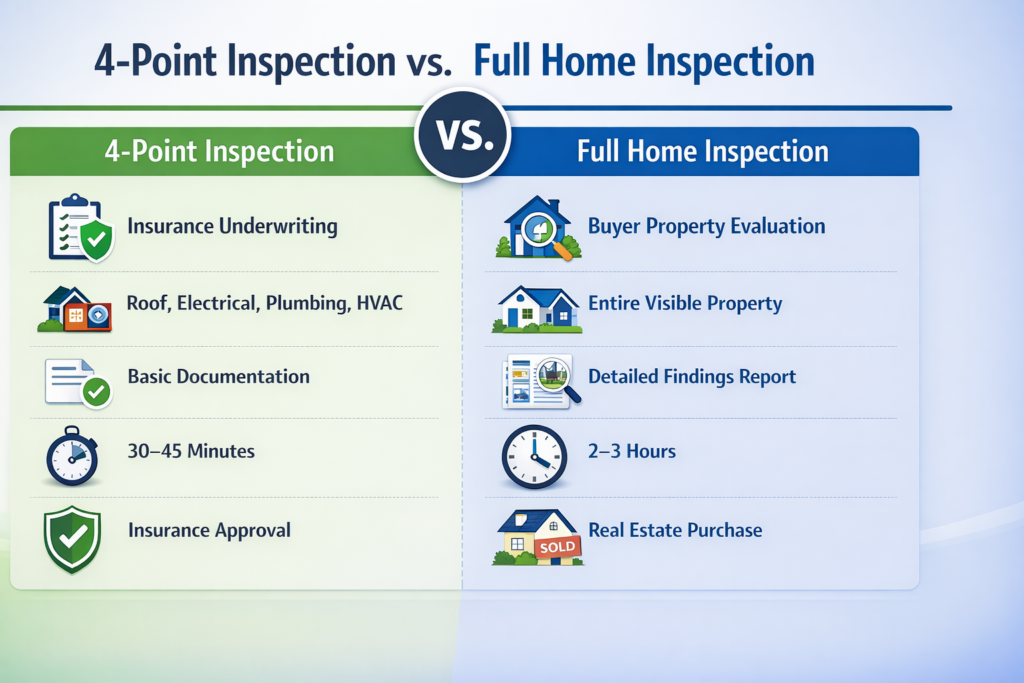
The easiest way to understand the difference is to compare their purpose, scope, and the type of information each inspection provides.
While both inspections involve evaluating parts of the home, they serve completely different needs.
A 4-point inspection helps insurance companies assess risk, while a full home inspection helps buyers understand the true condition of the property before making a purchase.
What Does a 4-Point Inspection Not Cover?
A 4-point inspection focuses only on four key systems in the home and does not evaluate the entire property.
Because of this limited scope, many important areas of the home are not included in the inspection report.
For example, a 4-point inspection typically does not evaluate:
- structural components
- foundation issues
- attic insulation
- windows and doors
- appliances
- drainage around the home
- moisture intrusion or ventilation problems
These areas can significantly impact a property’s safety, long-term maintenance costs, and overall value.
This is particularly important in South Florida communities such as Miami, Fort Lauderdale, Coral Gables, Hollywood, Pembroke Pines, and Homestead, where high humidity, heavy rainfall, and hurricane exposure can affect structural elements, roofing systems, and moisture control.
Because of these factors, most real estate professionals recommend that buyers obtain a full home inspection before purchasing a property, even if the insurance company only requires a 4-point inspection.
Do insurance companies accept a full home inspection instead?
Sometimes—but not always. While a full home inspection provides a much more detailed evaluation of a property’s condition, many insurance companies still require the specific documentation included in a 4-point inspection report.
Even if a buyer already has a full home inspection report, the insurance company may still request a separate 4-point inspection form to confirm that these four systems meet their underwriting guidelines.
For homeowners and buyers in Miami-Dade and Broward County, this means that both inspections may sometimes be needed during a real estate transaction—one to help the buyer understand the overall condition of the home, and another to satisfy the insurance company’s coverage requirements.
Need a 4-Point or Full Home Inspection in South Florida?
Whether you’re purchasing a home or meeting insurance requirements, choosing the right inspection can make a big difference.
At Home Inspection Halley, our team has been providing professional inspection services across Miami-Dade and Broward County for more than 21 years, helping homeowners, buyers, and real estate professionals understand the true condition of their properties.
We provide both 4-point inspections and full home inspections, delivering clear reports and practical insights so you can make confident decisions and protect your investment.
If you’re planning to buy a home or need documentation for insurance coverage, schedule your inspection today and get the answers you need before moving forward.
Need a 4 Point Inspection
in Miami-Dade or Broward?
So, Can a 4-Point Inspection Replace a Full Home Inspection?
In short, no.
A 4-point inspection is designed for insurance companies, not for evaluating the full condition of a property. It looks only at four systems: the roof, electrical, plumbing, and HVAC.
For buyers in Miami-Dade and Broward County, a full home inspection remains one of the most important steps before purchasing a property. It helps identify potential issues early, avoid costly surprises, and make confident real estate decisions.
At Home Inspection Halley, we provide both 4-point inspections and full home inspections, helping homeowners and buyers get the information they need to move forward with confidence.
If you’re buying a home or need an inspection for insurance purposes, scheduling the right inspection can make all the difference.