
A seller’s flood disclosure can answer an important question before you buy a Florida home: does the seller know of flooding or flood-related claims connected with the property? It cannot answer every question about moisture, repairs, drainage, mold, or hidden damage.
The Florida flood disclosure law gives buyers a standard form to review at or before the execution of a contract for sale of residential real property. The form records information known to the seller. A separate home inspection gives the buyer an independent look at the property’s current, visible condition.
That distinction matters in Miami-Dade, Broward, and other parts of South Florida. Heavy rain, tropical storms, drainage problems, roof leaks, plumbing failures, and past flooding can leave different kinds of evidence. Buyers need the seller’s disclosure, their own questions, and an inspection that follows the evidence on site.
What Is Florida Flood Disclosure Law?
Florida Statute 689.302 requires a seller of residential real property to complete and provide a flood disclosure to the purchaser at or before the execution of the sales contract. The statutory form asks whether, during the seller’s ownership, the seller has knowledge of flooding that damaged the property.
It also asks two related questions:
- Has the seller filed an insurance claim relating to flood damage, including a claim under the National Flood Insurance Program?
- Has the seller received assistance for flood damage, including assistance from the Federal Emergency Management Agency?
The form includes a notice that a standard homeowners’ insurance policy does not include coverage for flood damage. A buyer is encouraged to discuss separate flood insurance with an insurance agent. The disclosure is part of the buyer’s transaction documents. It is not an elevation certificate, a flood-zone determination, an insurance quote, or a condition report prepared by an inspector.
Florida’s statutory definition of flooding is specific. It addresses general or temporary inundation from inland or tidal waters, unusual and rapid runoff or surface water from an established water source, and sustained standing water from rainfall. A roof leak or a failed supply line may cause serious water damage without fitting that statutory definition of flooding. Buyers should avoid assuming that every moisture problem will appear as a “yes” on the flood form.
What Changed Under SB 948?

Senate Bill 948 became law in 2025, with the relevant changes effective October 1, 2025. The law revised Florida’s residential flood disclosure requirements and added the seller-knowledge and claim questions that buyers now see in the statutory form.
The practical change for a homebuyer is straightforward: review the form early, before the contract is executed, and use the answers to ask better follow-up questions. The form is not a promise that the property has never had a leak, an overflow, a drainage problem, or a repair that was performed without a claim.
SB 948 also includes other disclosure provisions for certain rental, mobile-home-park, condominium, and cooperative contexts. This article focuses on the residential sales disclosure used by homebuyers. A real estate attorney can explain how the statute applies to a particular transaction or contract.
What Flood-Related Information Must Be Disclosed?
The form is based on the seller’s knowledge. It asks about three connected topics: known flooding that damaged the property during the seller’s ownership, flood-related insurance claims, and assistance received for flood damage.
That wording creates useful context, but it also sets limits. A seller may not know what happened before they owned the home. A previous owner may have repaired damage privately. A claim may have involved a different type of water loss. Records may be incomplete, and an event that caused moisture may not meet the statute’s definition of flooding.
Treat the form as one piece of the due-diligence record. Ask the seller or agent to clarify the event, the affected rooms, the date, the source of water, the work performed, and whether permits or invoices are available. Request related claim information when it is available and appropriate to share. If the answers are unclear or inconsistent with what you see at the property, ask your real estate attorney how to proceed.
Why Previous Water Damage Matters to Homebuyers
Water can affect more than the surface finish that first catches your eye. Repeated or prolonged moisture may contribute to mold growth, swollen trim, deteriorated drywall, corroded fasteners, damaged insulation, wood decay, and electrical concerns. Poorly dried materials or cosmetic repairs can conceal the original condition.
The source of the water matters. A roof leak has a different repair path from a plumbing leak, rising water, wind-driven rain, or runoff from an adjacent lot. Drainage and grading can also influence whether a problem returns after the next heavy storm.
A previous event does not automatically make a house a bad purchase. It does mean the buyer should understand what happened, what was removed or repaired, and what is visible today. A full inspection can help document current conditions and identify areas that merit specialist evaluation.
Need a Full Inspection
in Miami-Dade or Broward?
Signs of Moisture and Water Intrusion During a Home Inspection
During a visual, non-destructive inspection, an inspector may look for patterns that are consistent with current or past moisture. Accessible areas commonly reviewed include:
Site, Grading, and Drainage
Look for soil or paving that directs water toward the structure, low areas near walls, blocked or poorly discharged gutters, staining at the foundation, and conditions that could keep exterior materials wet. In a condominium or townhouse, some drainage components may be common elements outside the unit’s inspection scope.
Roof, Attic, and Upper Walls
Water marks, damaged sheathing, deteriorated framing, patched roof areas, damp insulation, or staining around penetrations can help identify where further evaluation is needed. A stain by itself does not prove when the water entered or whether the leak is active.
Exterior Walls, Windows, and Doors
Cracked or open joints, failed sealant, damaged stucco, deteriorated trim, and staining below openings can allow water to enter. Window and door conditions should be considered with the property’s age, installation details, and recent weather.
Interior Ceilings, Walls, and Floors
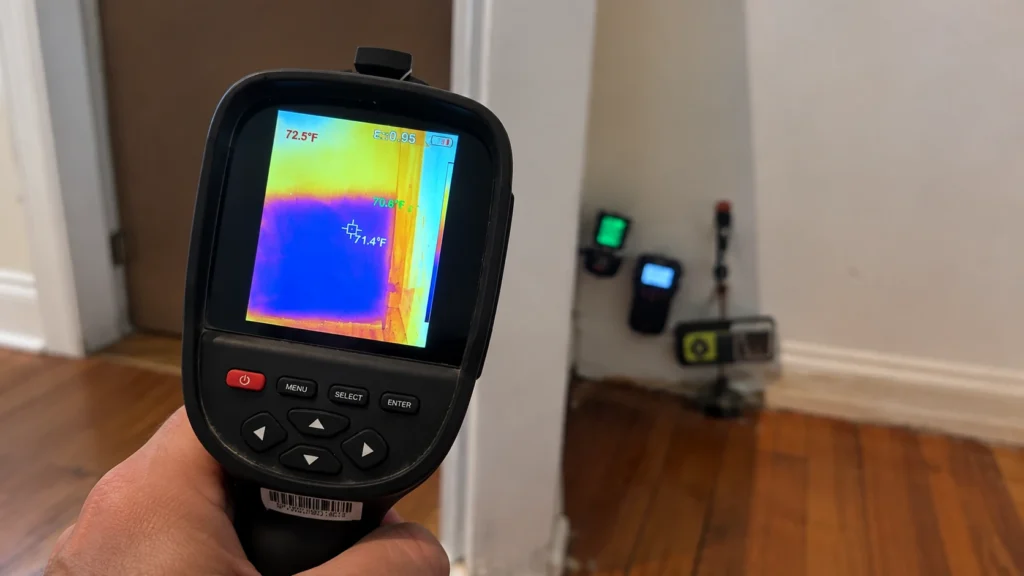
Discoloration, bubbling paint, swollen baseboards, musty odors, lifted flooring, warped cabinets, and rust on exposed metal can be relevant clues. Inspectors may use moisture meters or other tools when appropriate, but an instrument reading is not a diagnosis of mold, a guarantee that hidden areas are dry, or proof of the cause.
Electrical, Plumbing, and HVAC Areas
Past water exposure can affect outlets, panels, wiring, water heaters, air handlers, drain pans, and nearby finishes. An inspector documents accessible, observable conditions and recommends qualified electrical, plumbing, HVAC, mold, or structural specialists when the finding requires a deeper evaluation.
What a Home Inspection Can and Cannot Reveal
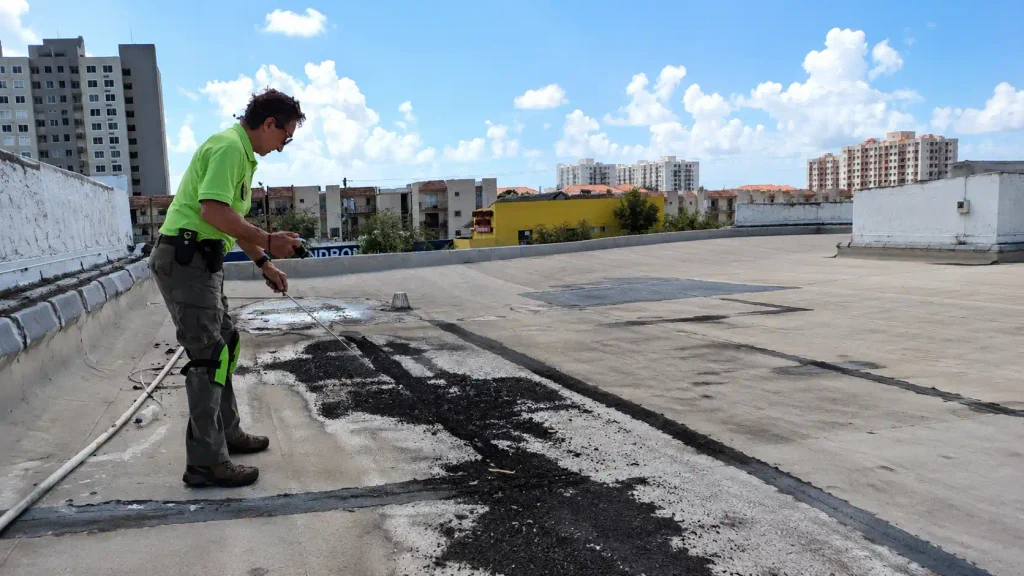
A home inspection can describe visible and reasonably accessible conditions at the time of the inspection. It can help a buyer understand whether there are signs of moisture, poor repairs, drainage concerns, or components that need specialist attention. A photo-supported report can also give the buyer a clearer record for discussions with the agent, seller, contractor, insurer, or attorney.
An inspection cannot guarantee that no hidden water damage exists. It cannot determine the exact age or cause of every stain, reconstruct the complete flood history, verify every repair behind walls, or decide whether a seller’s disclosure is legally sufficient. It is not a mold assessment, engineering study, insurance adjustment, flood certification, or legal opinion.
For a property with significant water history, the buyer may need more than one professional. Depending on what the disclosure and inspection show, that could include a licensed contractor, roof specialist, plumber, electrician, HVAC technician, mold assessor, structural engineer, surveyor, insurance agent, or attorney. The right referral depends on the observed condition and the buyer’s question.
Steps to Take Before Buying a Property With a Flood History
Read the Disclosure Before Signing
Ask for the completed Florida flood disclosure as early as possible. Read every answer and note anything that needs clarification. The statutory timing is at or before execution of the sales contract, but early review gives the buyer more time to investigate.
Request the Supporting Story and Records
Ask when the event occurred, what rooms or systems were affected, where the water came from, how long the property was wet, and what was replaced. Request permits, invoices, remediation records, photographs, and insurance or assistance documentation when available.
Check Flood and Insurance Questions Separately
A flood disclosure is not a flood-zone map or an insurance decision. Confirm flood-zone and elevation information through the appropriate public or professional sources, and discuss flood coverage and exclusions with an insurance agent before the inspection or contract deadlines close.
Schedule a Full Home Inspection
Arrange an independent inspection during the due-diligence period. Tell the inspector about the disclosure and ask them to pay particular attention to reported areas, repairs, drainage, roof or attic access, and signs of moisture. If the property is in a condominium, clarify what the unit inspection covers and what belongs to the association.
Bring in Specialists When the Evidence Calls for It
If an inspection identifies active moisture, damaged electrical components, roof concerns, suspected mold, or structural movement, obtain the appropriate specialist’s evaluation. A home inspection can identify conditions that deserve follow-up, while the specialist determines the repair, testing, or design requirements.
Use the Findings in Your Decision
Your agent and attorney can explain inspection contingencies, requests for records, repair negotiations, and closing decisions. Keep the disclosure, inspection report, specialist reports, and correspondence together so the transaction record reflects what was known and what was investigated.
Frequently Asked Questions
Does Florida Require Every Seller to Complete a Flood Disclosure?
Florida Statute 689.302 requires the seller of residential real property to complete and provide the statutory flood disclosure to the purchaser at or before the execution of the sales contract. Questions about a specific property, contract, or exemption should go to a Florida real estate attorney.
Does a Completed Disclosure Mean the Home Is Outside a Flood Zone?
No. The flood disclosure records information known to the seller. It does not determine the property’s flood zone, elevation, insurance requirements, or future flood risk. Ask an insurance agent and the appropriate public or technical professionals for those questions.
Can a Seller Answer “No” if the Home Has Water Stains?
The form concerns the seller’s knowledge of flooding that damaged the property and related claims or assistance. A roof leak, plumbing failure, HVAC overflow, or other water intrusion may not fit the statutory definition of flooding. Stains still deserve investigation, even when the disclosure answer is “no.”
Can a Home Inspection Prove That a Property Flooded in the Past?
An inspection may identify signs that are consistent with water intrusion or past repairs, but it usually cannot prove the complete history, exact date, or legal classification of an event. Records, specialists, and legal advice may be needed.
Does Homeowners Insurance Cover Flood Damage?
The statutory disclosure form states that homeowners’ insurance policies do not include coverage for flood damage and encourages buyers to discuss separate flood insurance with an insurance agent. Coverage depends on the policy and the event, so obtain a current insurance explanation before relying on it.
Should I Skip the Inspection if the Disclosure Says There Was No Flooding?
No. The disclosure and the inspection answer different questions. An inspection can still find roof leaks, plumbing problems, drainage defects, mold-like growth, or repairs that are unrelated to a statutory flood event.