In Florida, hurricanes rarely create problems from scratch; they expose the weaknesses your home already has. What looks like a minor maintenance issue today can quickly become a major insurance claim once hurricane-force winds and heavy rain arrive.
This isn’t just a precaution—the numbers reflect just how significant the risk is. According to the National Centers for Environmental Information (NCEI), Florida experienced 36 tropical cyclones that each caused more than $1 billion in damages between 1980 and 2024, making hurricanes the state’s most destructive and expensive weather events.
For homeowners, the message is clear: hurricane season preparedness starts long before a storm appears on the forecast. Making sure your roof, exterior openings, drainage systems, and other critical components are in good condition can significantly reduce the risk of damage when severe weather strikes.
Learn hear the key areas South Florida home inspectors evaluate, the inspections that provide the greatest value, and the steps you can take to better protect your property before the next storm.
When Should You Start Preparing Your Home for Hurricane Season?
While the Atlantic hurricane season officially runs from June 1 through November 30, the Federal Emergency Management Agency (FEMA) encourages homeowners to inspect their property, identify structural vulnerabilities, complete preventive maintenance, and strengthen their home before severe weather becomes a threat.
Planning ahead also gives you enough time to schedule inspections, complete repairs, and avoid the rush that typically occurs when a hurricane is approaching. Roofing contractors, home inspectors, and repair professionals are often in high demand once a storm is forecast, making early preparation one of the smartest decisions homeowners can make.
But which preventive home inspections should you prioritize before hurricane season begins?
Which Home Inspections Are Recommended Before Hurricane Season?
Not every inspection serves the same purpose. Depending on the age and condition of the property, several types of inspections can help homeowners prepare more effectively for hurricane season.
- Roof inspections: Often the highest priority because it evaluates the condition of the roofing system, identifies damaged or missing shingles, deteriorated flashing, potential leak points, and other defects that could lead to significant damage during high winds or heavy rain.
- Wind Mitigation: It focuses on documenting construction features that improve the home’s resistance to hurricane-force winds. In addition, the inspection may qualify eligible homes for insurance premium credits based on Florida’s wind mitigation standards.
- 4-Point Inspection: For older homes, a 4-Point Inspection can also be beneficial. This inspection evaluates the four major systems —the roof, electrical system, plumbing, and HVAC system.
- Full Home Inspection: A comprehensive home inspection can identify visible structural concerns, moisture intrusion, drainage issues, exterior deterioration, and other maintenance items that may increase the home’s vulnerability during hurricane season.
At HALLEY Home Inspections, we often recommend combining a Roof Inspection with a Wind Mitigation Inspection before hurricane season to gain a more complete understanding of your home’s readiness.
Why Roof Inspections Should Be Your Top Priority Before Hurricane Season
When it comes to hurricane preparedness, no part of your home is more important than the roof. It serves as your home’s first line of defense against high winds, heavy rain, and wind-driven debris. If the roofing system fails, the risk of water intrusion and structural damage increases dramatically.
The importance of a professional roof inspection isn’t just common sense—it’s backed by research. Following Hurricane Ian, the Insurance Institute for Business & Home Safety (IBHS) evaluated 3,646 single-family homes across Southwest Florida to understand how different roofing systems performed under extreme weather conditions.
Their findings revealed clear patterns:
- Nearly 50% of asphalt shingle roofs sustained some level of damage.
- Roofs more than 10 years old were significantly more vulnerable than newer roofing systems.
- Metal roofs delivered the best overall performance, with only about 12% showing damage.
- Tile roofs generally performed well until they reached approximately 20 years of age, when the likelihood of damage increased considerably.
The study also reinforces another important fact: up to 90% of post-catastrophe insurance claims involve roof damage, making the roof one of the most critical components to evaluate before hurricane season begins.
These findings demonstrate that a roof doesn’t have to be leaking to be at risk. Lifted shingles, deteriorated flashing, aging sealants, or poorly executed repairs may go unnoticed during everyday weather, yet they can become the starting point for significant water intrusion and costly structural damage once hurricane-force winds arrive.
What Does a Professional Roof Inspection Include?
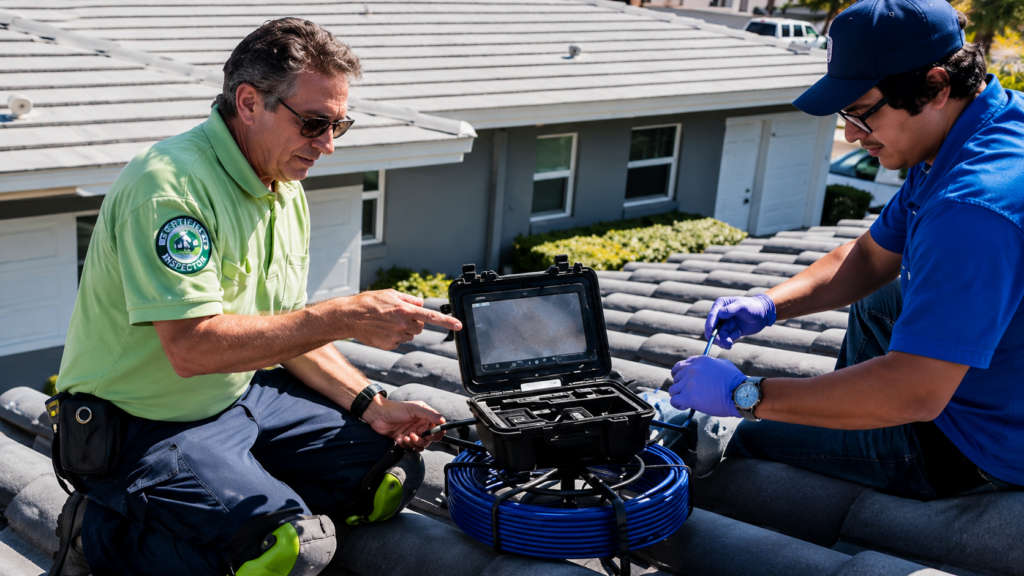
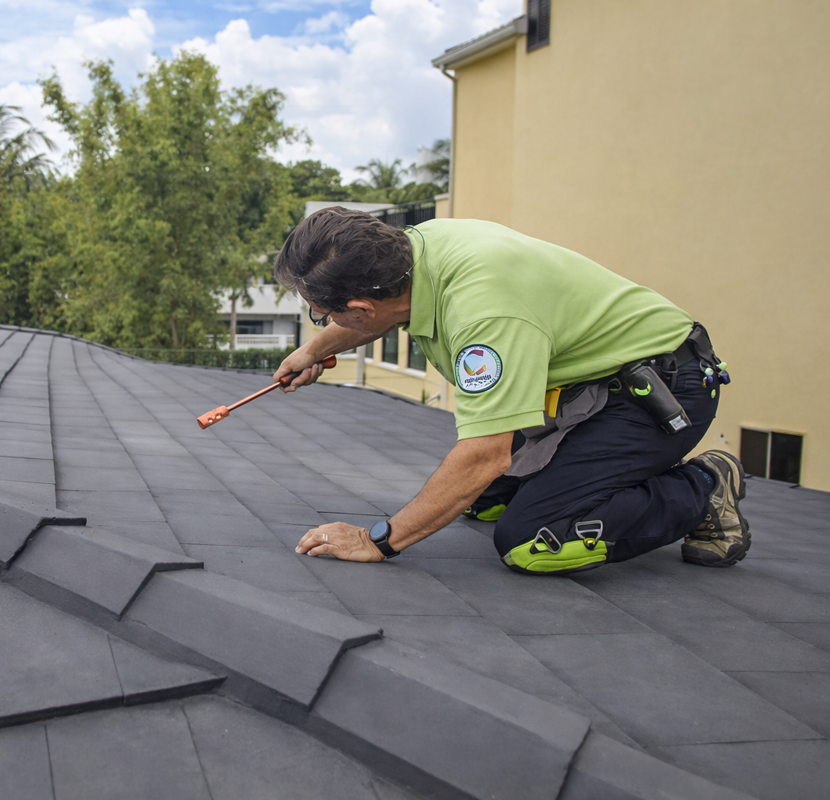
A roof inspection is designed to identify visible defects that could compromise your home’s ability to withstand severe weather. Depending on the roofing system and the accessibility of the property, inspectors typically evaluate:
- Roofing materials, including shingles, tile, or metal panels
- Missing, loose, cracked, or deteriorated roofing components
- Flashing around vents, skylights, chimneys, and other roof penetrations
- Sealants, exposed fasteners, and signs of previous repairs
- Roof edges, soffits, fascia, and drainage components
- Gutters and downspouts
- Visible signs of moisture intrusion from the attic, when accessible
Rather than simply listing defects, the inspection helps homeowners understand which issues require immediate attention. The report, actually, becomes a valuable planning tool for homeowners.
At Home Inspections HALLEY, every roof inspection includes a comprehensive digital report with detailed observations, high-resolution photographs, and practical recommendations based on current inspection standards.
Whether you’re planning preventive maintenance, requesting repair estimates from a roofing contractor, documenting your home’s condition for future reference, or preparing for hurricane season, having a clear and well-organized report helps you make informed decisions with confidence.
Wind Mitigation Inspection and Report for Florida Hurricane Season
While a roof inspection focuses on the condition of your roofing system, a Wind Mitigation Inspection evaluates how well your home is built to resist hurricane-force winds. For homeowners preparing for Florida’s hurricane season, it is one of the most valuable inspections because it combines improved safety with potential insurance savings.
During the inspection, South Florida inspectors document key wind-resistant construction features, including the roof-to-wall connections, roof covering, roof deck attachment, secondary water resistance, and opening protection for windows, doors, and garage doors.
These are the same features insurance companies use to assess how well a home may perform during a hurricane.
Opening Protection: Impact Windows, Doors & Garage Doors
Although the roof is one of the primary focuses of a Wind Mitigation Inspection, it isn’t the only component that matters when preparing your home for hurricane season. A home’s ability to withstand high winds also depends on the strength and protection of its exterior openings.
During the inspection, the inspector documents whether windows, exterior doors, garage doors, skylights, and other vulnerable openings are protected with impact-resistant products or approved storm protection systems. These protective features help reduce the likelihood of wind entering the home if debris breaches an opening during a hurricane.
Garage doors receive particular attention because they are often one of the largest openings in a home. If a garage door fails during a storm, the sudden increase in internal air pressure can place additional stress on the roof and, in severe cases, contribute to significant structural damage.
Wind Mitigation Report
The inspection results are compiled into an official Wind Mitigation Report, which homeowners can submit to their insurance provider. Depending on your home’s construction and your insurance provider’s eligibility requirements, qualifying wind mitigation features may help reduce homeowners insurance premiums.
Whether you’re purchasing a home, reviewing your insurance policy, or simply preparing for hurricane season, a Wind Mitigation Inspection provides valuable information about your property’s resilience.
At HALLEY Home Inspections, our South Florida inspectors perform professional inspections delivering detailed digital reports that clearly document your home’s wind-resistant features, helping you make informed maintenance decisions before the next storm arrives.
Additional Inspections That Can Help Prepare Your Home for Hurricane Season
Every home is different, and the most appropriate inspection often depends on its age, maintenance history, and overall condition. While a Roof Inspection and Wind Mitigation Inspection are among the most valuable ways to prepare for hurricane season, additional inspections can help identify maintenance issues and conditions that may become more serious during severe weather.
4-Point Inspection for Older Homes
For older homes—typically those 20 years or older; a 4-Point Inspection can provide valuable insight into the condition of the property’s four major systems: the roof, electrical, plumbing, and HVAC. Although this inspection is commonly requested by insurance companies for older homes, it is also a practical tool for homeowners preparing for hurricane season.
Heavy rain, prolonged power outages, and high humidity can expose weaknesses in aging systems that may not be obvious during everyday use. A 4-Point Inspection helps identify visible signs of deterioration or deferred maintenance, allowing homeowners to address potential issues before they become costly repairs or unexpected emergencies.
Need a 4 Point Inspection
in Miami-Dade or Broward?
Full Home Inspection
A Full Home Inspection provides the most comprehensive evaluation of a property’s visible and accessible components. In addition to the roof, inspectors evaluate the home’s exterior, attic, drainage, moisture intrusion, electrical system, plumbing, HVAC equipment, windows, doors, and other structural elements that could affect the home’s performance during severe weather.
Unlike a 4-Point Inspection, a Full Home Inspection is designed to provide a broader assessment of the home’s overall condition. It evaluates many additional components and is intended to help homeowners better understand the property’s condition. The two inspections serve different purposes, and one should not be considered a replacement for the other.
A Full Home Inspection is especially beneficial for homeowners:
- have not had their home professionally inspected in several years
- recently purchased an older home
- want a complete assessment before hurricane season begins
By identifying visible defects, deferred maintenance, and potential problem areas early, homeowners have the opportunity to make informed repairs before severe weather exposes existing vulnerabilities.
Infrared Thermal Imaging
Some problems cannot be detected with a visual inspection alone. Infrared thermal imaging helps inspectors identify temperature differences that may indicate hidden moisture intrusion, active leaks, insulation deficiencies, or electrical hot spots behind walls, ceilings, and other concealed areas.
While thermal imaging is not a standalone inspection, it can be a valuable addition when investigating potential moisture issues or evaluating areas that may have been affected by previous leaks.
Detecting these hidden conditions before hurricane season allows homeowners to address problems early and reduce the risk of more extensive water damage during future storms.
Protect Your Home Before the Next Storm Arrives
Preparing for Florida hurricane season is about more than checking items off a list—it’s about understanding your home’s condition before severe weather puts it to the test. While a hurricane preparedness checklist is a great place to start, it cannot replace the expertise of a professional home inspection.
An experienced inspector can identify visible defects, maintenance concerns, and potential weaknesses that homeowners often overlook, giving you the information needed to make informed repairs before hurricane season begins.
At HALLEY Home Inspections, we help homeowners throughout South Florida protect their investment with professional Full Home Inspections, Roof Inspections, Wind Mitigation Inspections, and 4-Point Inspections. Our detailed digital reports provide the insights you need to better understand your home’s condition and prioritize maintenance before severe weather strikes.